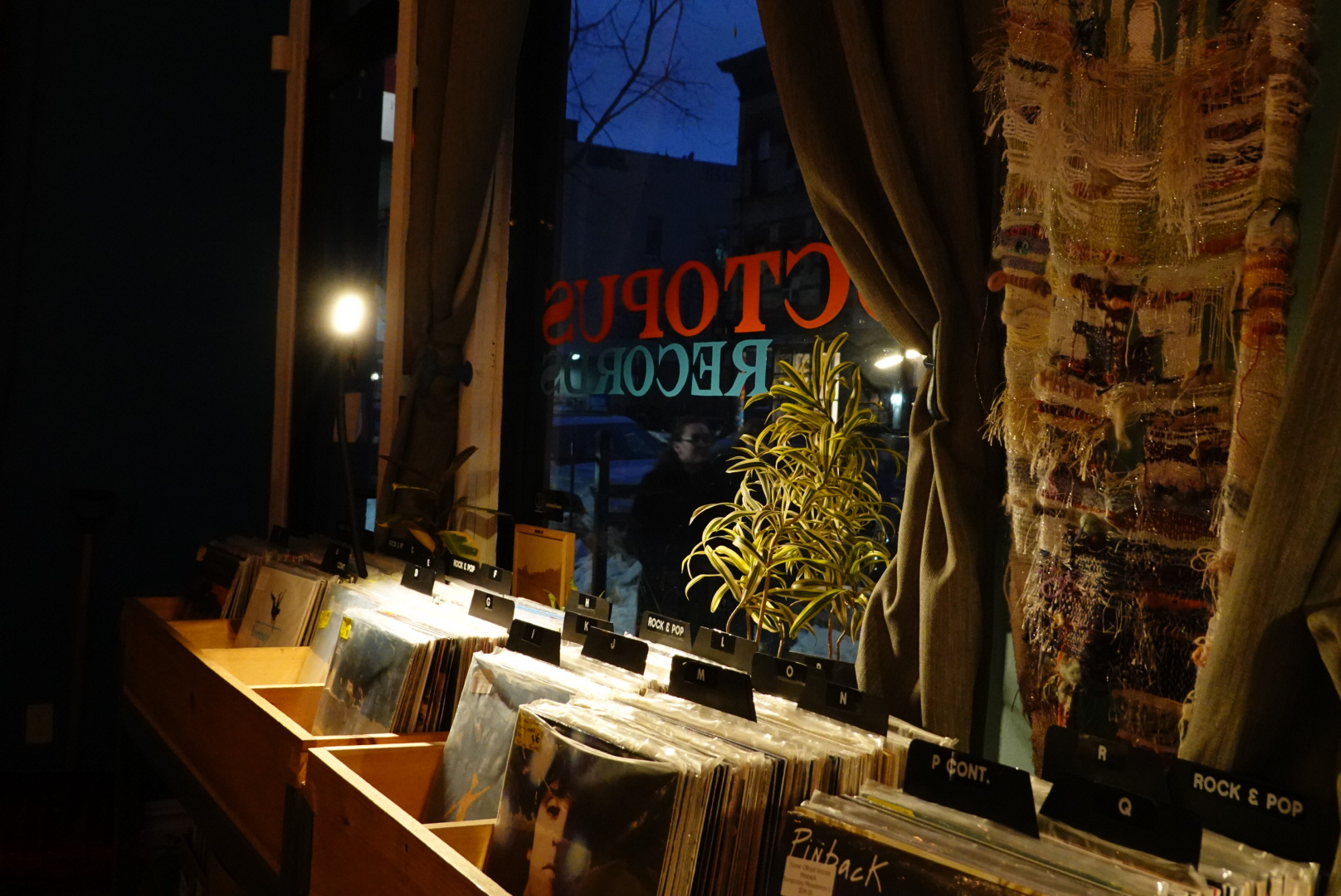
Inside the shop of Octopus Records in Brooklyn, New York. Photo Credit: Ariana Santiago
As soon as Jess Farnham, 25, wakes up in the morning, she doesn’t turn her phone off airplane mode. She instead turns to her bookshelf next to her bed and grabs her daytime gratitude journal. After getting ready for the day, she turns to the sofa across from her bed to help her not fall back asleep and be tempted to use her phone. While having breakfast, she still does not turn her phone off from airplane mode, and instead reads a non-fiction book because it helps her start her day feeling inspired.
“Although we spent so much time online scrolling and stuff with, you know, it’s a thing of, ‘oh, you want to be more connected,’ but actually, I think spending more time on screens and scrolling definitely left me feeling more disconnected from the little joys in life,” She said. “I feel like a lot of analog things bring a lot of people love joy, but they kind of forgotten about those.”
Farnham, a social media content creator and freelance social strategist in Newcastle, England, decided a year ago when the internet trend first began, to spend less time scrolling and more time creating, demonstrating a growing shift among young people to call 2026 the year of analog.
On the internet and popular social media apps like Instagram or TikTok, Gen Zers, or people 14 to 29 this year, have declared 2026 the year of analog hobbies because they are tired of digital burnout and doomscrolling. With hashtags like #analog or #analoglife, a growing number of young people are turning back to screen-free activities such as crafting, crocheting, vinyl collecting, journaling, and film photography to disconnect from the expectations and constant access of being online.